Article: Most beach towels are plastic. Here's what you're missing.
Most beach towels are plastic. Here's what you're missing.
Have a look at the label on your beach towel. If it dries fast, packs down small and shrugs off sand, there's a good chance it's around 80% polyester and 20% polyamide, both made from petroleum. It'll be sold to you as microfibre, which sounds like a technology rather than a material.
I'm not here to tell you those towels are useless. They're light, they're gone in twenty minutes, and if you're carrying everything on your back for three weeks that's a genuinely good trade. But it is a trade, and nobody puts that on the label.
The part worth knowing: synthetic fabrics shed plastic fibres every time you wash them, and they shed most when they're loose and fluffy, which is exactly what a towel is. One study that put twelve different polyester textiles through a wash found releases ranging from a couple of hundred to over seventy thousand fibres per gram, depending on how the cloth was made. It doesn't get better as the towel ages, either. It gets worse.
That's the last unhappy paragraph. The rest of this is about the good stuff.

Cotton actually absorbs
Here's the bit that surprised me when I started learning about this properly.
Polyester doesn't really dry you. It repels water, the water ends up sitting between the fibres rather than going into them, which is why a synthetic towel dries so fast and also why it can feel like it's shoving water around your back rather than lifting it off.
Cotton does the opposite. Each fibre drinks the water in and holds it. That's why a good cotton towel feels like it's doing something, and why it takes longer on the line afterwards. The slowness isn't a flaw. It's the same property, seen from the other end.
It gets better with age
Synthetic towels are at their best on day one and go downhill from there, they pill, they hold onto smells, and the finish wears off.
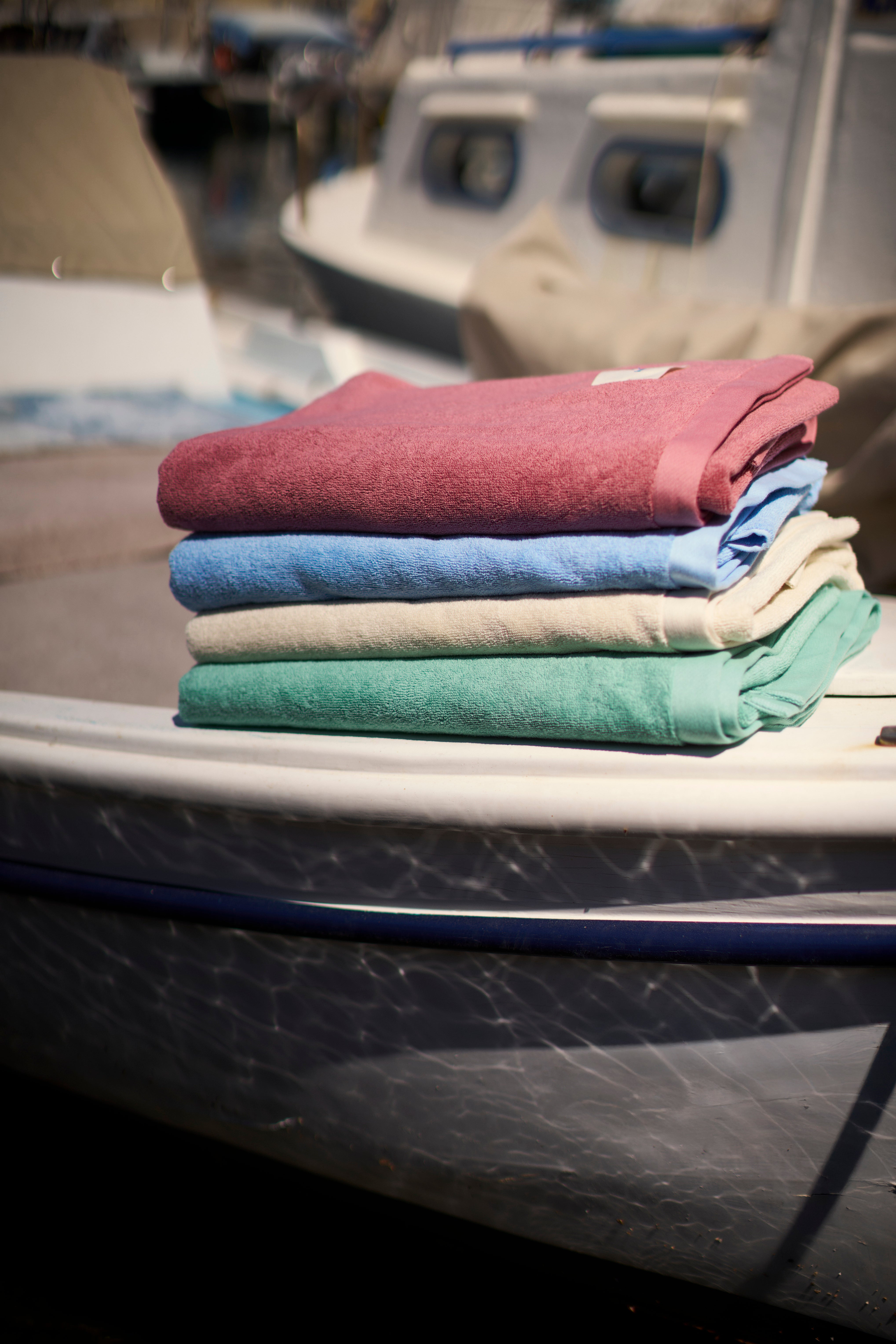
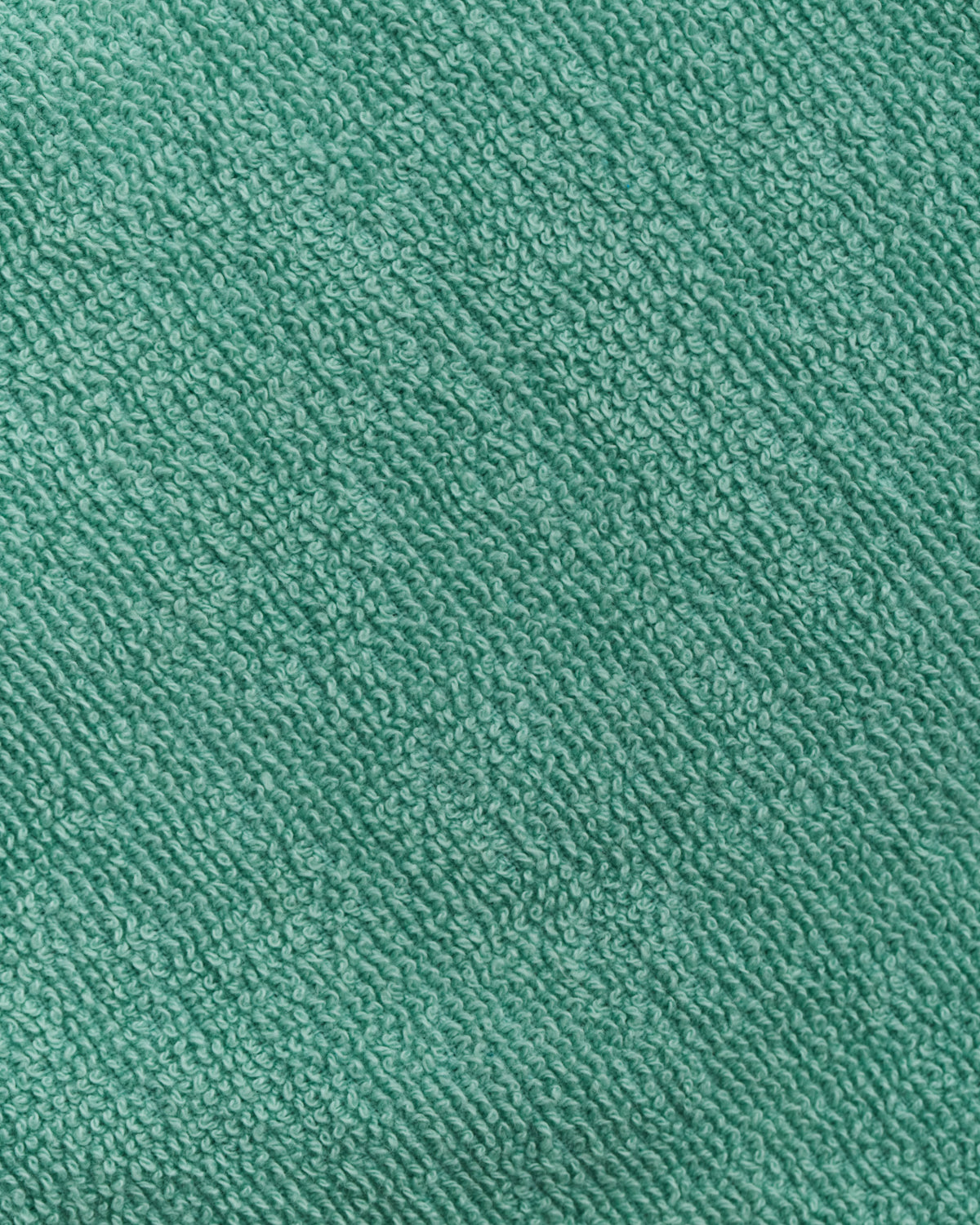
Cotton terry is the rare thing that improves. The loops soften and open up over the first ten or so washes, and a towel you've had for three years is better than the one you unwrapped. Ours are woven in Portugal, by a supplier that has been making terry for decades.
It holds the sun
This is the one I care about most, and it's the least measurable.
A cotton towel that's been hanging in the light all morning is warm right through when you come back to it. You feel it before you feel anything else, that first press of warm dry cloth after an hour in the water. Polyester doesn't hold heat the same way. It's cool and slick and efficient and it gives you nothing.
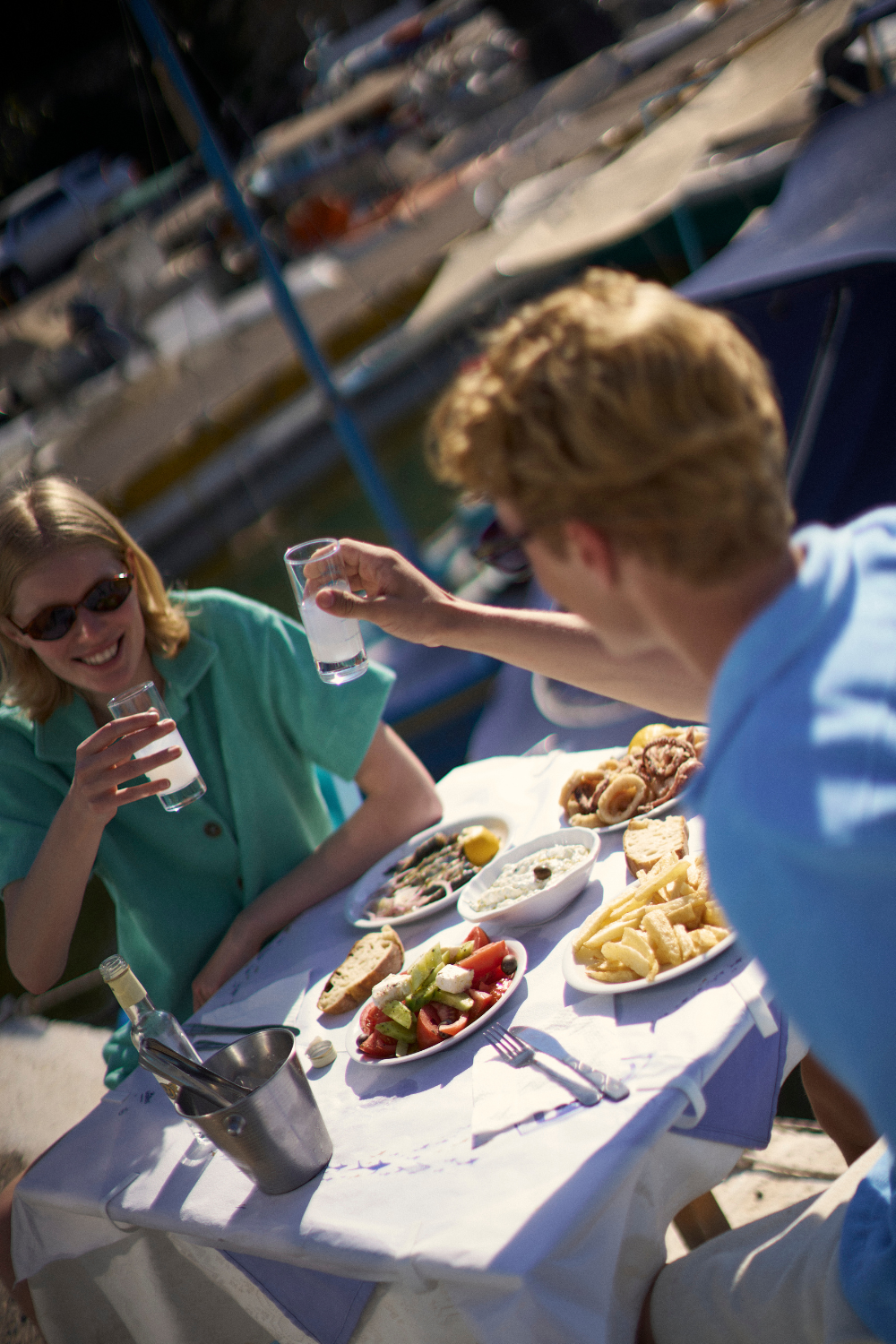
It's one of the things I remember most clearly about Greek summers as a child, and it's stayed with me through everything we've made since.
When you're buying, look for three things
GOTS certification. It covers the cotton and how it was processed: the dyes, the water, the conditions at the mill. Stricter than a plain "organic cotton" claim. Anyone who has it will say so.
GSM. Grams per square metre, the honest measure of how much towel you're getting. Light beach towels sit around 300–400. Anything from 500 up is properly substantial, ours are 600. If a brand won't tell you, there's usually a reason.

A named country. Portugal and Turkey have the deepest terry-weaving traditions anywhere, generations of accumulated knowledge about how to build a loop that holds up. "Ethically made" tells you nothing; "woven in Portugal" tells you something.
And three things to ignore: thread count (it's a bedsheet number, meaningless for terry), "Egyptian cotton" with nothing else attached (the term is barely policed), and antibacterial or quick-dry treatments (they're coatings, they wash out, and a towel that gets hung up properly doesn't need them).
And once you've got it home
Wash it before you use it. Almost nobody does this and it's the one that matters most, the first wash opens up the pile and the towel comes out noticeably more absorbent than it went in.
Skip the fabric softener. It leaves a waxy film that flattens the loops and makes the towel less absorbent, which undoes the exact thing you paid for. Mild detergent at 30–40°C is all it needs, and less of it than you'd think.
Keep lights and darks apart for the first few washes, then stop worrying about it.
Dry in the shade, or tumble on low. Sun will fade the colour over a season, which is worth saying, because a towel warming in the sun between swims is a different thing entirely, and very much the point. Just don't leave the laundry out there all day.
If a loop pulls loose, cut it. Never tug it. Terry is a continuous loop of yarn, so pulling one drags a whole line of neighbouring loops flat with it. A pair of scissors and two seconds and the towel is fine for another decade.
LiTTLE MARiNER towels are woven in Portugal from GOTS-certified organic cotton terry.
Sources: Systematic Study of Microplastic Fiber Release from 12 Different Polyester Textiles during Washing, Environmental Science & Technology. Washing load influences the microplastic release from polyester fabrics, Scientific Reports.